muted.
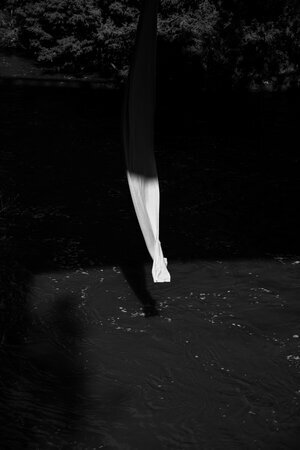
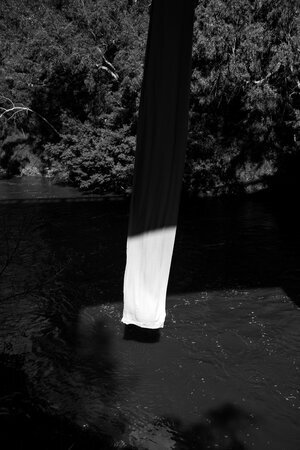
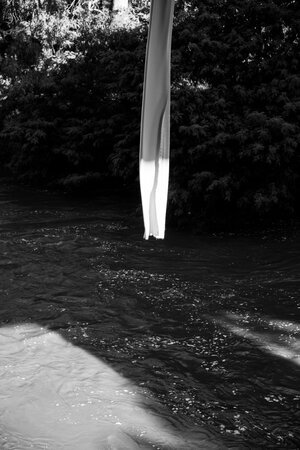
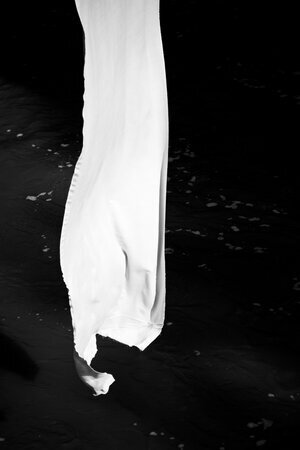
A series of work undertaken from March until June 2020. This series of work explores different materials and mediums including 3D computer programs, soy wax, Iranian Instruments and fabric. I have tested these various modes of representation to make installations and have recorded these using photography and film. This series of work has been driven from an interest of censorship in Iran, in particular it addresses censorship of the media and lack of rights for those living under the extremist regime in Iran. Censorship in Iran is a current attempt to mute or suppress Iranian identity, in Muted this is explored through the compulsory wearing of the hijab, the censorship of Iranian instruments and women in the media. The purpose of this work is to highlight this current practice in Iran, adding to the conversation and to raise awareness of Iranian identity and highlighting the brutality of a totalitarian regime on Iranian lives. The censorship of Iranian culture and art by the regime has had an ongoing impact on Iranian identity and freedom of expression. It is the direct censorship of art and propaganda through art, as well as the ongoing censorship of women and their rights, and the voices of the people which continue to contribute to this decline or change of Iranian Identity.
Muted is an exhibition which explores the act of concealing and revealing to highlight different methods of censorship in modern day Iran. This exhibition proposal outlines the overall concept looking into the notion of censorship in Iran relating specifically to women and minorities. It outlines the various modes of representation to be explored which include photography, sound and video art combined to create installation based works. Censorship in Iran is a current attempt to mute or suppress Iranian culture, in Muted this is explored through the compulsory wearing of the hijab and the censorship of Iranian instruments in the media. The purpose of this exhibition is to highlight this current practice in Iran, adding to the conversation and to raise awareness of Iranian identity and the totalitarian regime in Iran. To invade a nation is simply infiltrating the culture by manipulating language, history and music. The desired outcome is to create a compelling exhibition which aims to initiate curiosity in the viewers to learn about modern day Iran, its past and current positionality in the world.
Muted is an exhibition which comments on censorship in Iran, specifically the compulsory hijab and the censorship of women’s voices and instruments in Iranian media. Since 1979 wearing of the hijab has been compulsory in Iran with harsh penalties including fines, jail time or in the past lashing. Both women's voices and Iranian instruments have also been commonly censored in the media, with women banned from starring as the main singer of a song or appearing with “appropriate clothing” and instruments censored from viewers on film and television. The issue of the hijab as a tool to control Iranian women is not something new and has been a battlefield between modernism and conservatism for decades. A familiar subject of many to address or to take advantage. The Pahlavi monarchist dynasty brought a fresh breath into Iranian culture and identity but it was also strongly in opposition of wearing veils, fundamentally opposite of what Islamic regime is compelling as “appropriate clothing”. The core and nature in both eras are the same notion of suppression, either exposing and forcing the conservative communities to adopt an unfamiliar semi-western lifestyle by removing their covers or nowadays in Iran, forcing Islamic ideology to all the existing groups and subgroups.
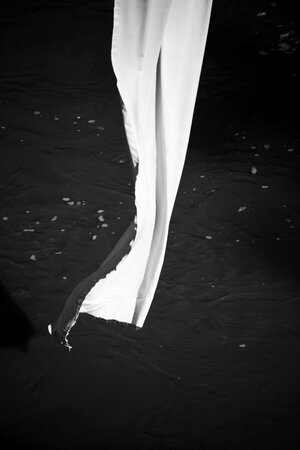
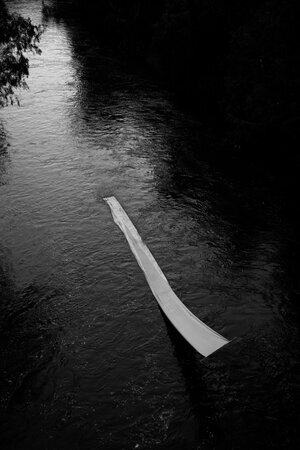
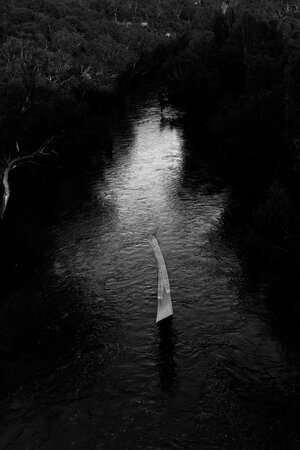
The proposed exhibition will have three modes of representation to create an immersive experience within the gallery space. ‘Muted’ uses photography, video and sound to make installations which represent various aspects of censorship. The artworks will explore these ideas using white and black fabrics, traditional Iranian instruments, film, sound and lighting. The series of works will document the tension between the fabric and the instrument, with the fabric and lighting both concealing and revealing the instruments in different ways. Currently in Iran wearing a white hijab is a sign of rebellion, with women using it as a subtle form of protest. To comment on this, the fabric used in these works will be white, referencing this movement and the fabrics in black makes a closed space to create an intimate environment between the instrument and the viewer. Heavy black fabric will be hung like curtains to create an isolated moment between the viewer and the instrument, while music plays from a famous and rebellious Iranian female artist from the 1940s. Inside the hollow of the instrument a subtle red light sits, symbolising the blood of female genital mutilation. The instruments being incomplete, altered and changed become subtle representations of Iranian identity and culture which is also undergoing a similar action. In order to create a sense of dynamism in the work, I plan to create a sense of stillness and a sense of movement with the chosen materials, to create contrast and tension between the two. The contrast itself is a duality even though I don’t believe in the concept of stillness but I’m creating a sense of stillness in order to hold the viewers long enough in that tight and intimate environment.
Upon entry guests will be served tea and an Iranian date dish, traditionally served during the mourning of a relative, but for this particular exhibition it mourns the slow decline of Iranian Identity and censorship of the culture. In the other exhibition room a series of seven large portrait style photographs of the instrument interacting with white fabric sit side by side on the wall. In the main room the instrument from the photographs hang from the ceiling inside the black harem. The slightest breeze in the space and weight of the instrument gives constant subtle movement to the installation. The missing pieces of the instruments sit neatly on an altar outside of the black harem. Traditional Iranian music plays from the black harem, by Qamar Vaziri ( قمر وزیر ی ) a famous female musician, recorded i n the 1940s-1950s way before the Islamic revolution. The photographs, installation and soundscape will feel powerful, a homage to a past reality, a mourning and a celebration. In the corner of the exhibition space plays a short film on a tv, the third mode of representation. The film shows the artist covered in white fabric, playing the tar. Unable to see or feel the instrument the artist will attempt to make sound and music. A set of headphones sit on the site of the tv for the viewers to hear the muffled sounds of the tar.
The body of the tar is fragile, soft and tender, with dainty curves and hollow structure. For one to perform on this instrument it demands a particular softness and tenderness in a musician's personality to connect with it, and understand its capabilities. This relationship between the instrument and the player is so intimate that it transcends the relevance of the gender of the player. The fabric takes the shape of the body of the tar, caressing it, holding it, hiding it. The Fabric is able to contain the object, concealing it and revealing it to the viewer.
Muted as an artistic exploration will contribute positively to the development and sustainability of my artistic practice, as it is the beginning of a series of works and exhibitions which will touch on the theme of censorship. Each exhibition or body of work will expand on the last, investigating different materials or traditional items as symbolic gestures, and different modes of representing these ideas or research. The overall investigation and research into censorship, and the way this is manifesting right now expands a deeper and clearer view of how censorship and control in the media is a strategic form of a modern control by the government in the middle east and also in Australia. This ongoing understanding will inform the direction of this series of work over the coming years, and will grow and develop through each iteration. This investigation into censorship, as an idea or movement has inspired me to research deeper into censorship broadly, across different cultures. Having experienced it in Iran, and now being a resident of Australia, my curiosity to learn about censorship in Australia has been opened. Australian also has its own aspects of censorship, particularly when it comes to historical events, involvement in wars in the middle east and environmental coverups. The use of instruments and fabric in ‘Muted’ become a form of material investigation, and materials as symbols. The act of concealing and revealing in this exhibition is one ongoing exploration of how materials and objects intersect to portray significant symbolic meanings. The Iranian classic instruments symbolises a gendreless non-binary tool that carries emotions through sound. Iranian traditional music is rich in carrying political messages. It is important through this exploration to address how powerful instruments have been throughout history to keep a culture alive, it is also important to address the position of women and how similarly they are both under suppression. An Instrument is a symbol of resistance. With all the efforts the government put through removing the picture of the instruments from the media and the books they still can't mute the sound of them. The use of fabric/curtain in relation to mutilation and hijab is symbolic of heavy meanings in Iranian history as the word in Persian for curtain is pardeh ( پرد ه ) which i s also defined as “virginity curtain” or i n english, hymen. It also translates to instrument frets and finally hijab itself as a cover. Hence this symbolises important subjects around sexuality and identity in the middle east, for instance in orientalism the curtain was playing the rule of the divider in harem-sarays with an intangible eastern female in the centre of the harem that is often the subject of the western coloniser and his fantasy of infiltrating the space. The instrument and fabric become the medium that will allow me to explore the concept in different scales and environments, showing me ways and possibilities to express and explore ideas around control, being seen, heard or muted. It is important for my ongoing practice that I continue to explore, understand and exhibit works which highlight the methods of control of a particular nation and culture. This ideology is understood through education in many colonised nations around the world, and is becoming more tangible and visible to people, especially in a time when the majority have easy access to the internet and they will have enough knowledge to decide which story to listen to while this knowledge is now at our fingertips. But for this particular subject it is important that people know that Iran has been ruled by one of the most totalitarian regimes in the middle-east, even accessing the free internet is a daily challenge for most Iranians. Censorship is an ongoing systematic attempt to take away an aspect of one's culture, which is a technique used by the Islamic regime as a way of control, an important and ongoing issue which should remain in the public eye.